
Free, sourced, and open to everyone
Ask a question about this art. Get an answer with a source.
More than half a million sourced facts about the performers, figures, makers, works, and organizations of ventriloquism, connected to one another and cross‑referenced.
Four hundred years of it, in one place, searchable in plain English.
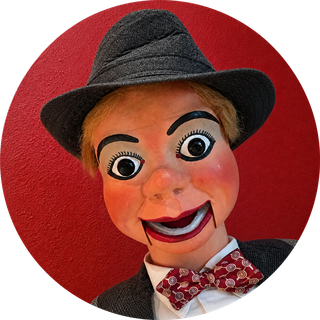
Why it is unreachable.
The shows continue. The audiences laugh. The figures survive. And the record of all of it sits in books, industry newsletters, back issues, newspaper mentions, photo albums, auction listings, obituaries, and file cabinets.
Almost none of it is connected to any of the rest.
So the questions that matter go unanswered. Who made this? Who worked her? What became of them? The answer usually exists. Nobody can get to it.
Half a million facts, and the source behind every one.
Figures as of 7 September 2026.
What makes it different
A large database is not necessarily a trustworthy record.
Every fact in the Archive carries the source it came from. Sources are ranked, so a performer’s own contemporary account can be distinguished from somebody else’s recollection decades later. When sources disagree, the Archive records the disagreement instead of quietly choosing the tidier answer.
The goal is not to sound certain. The goal is to show what the record actually supports.
What the Archive holds
People
Performers, makers, writers, teachers, collectors, dealers, producers, and the people whose work does not fit neatly into one title.
Figures
A figure is not merely a prop attached to a performer. It has a maker, mechanisms, owners, repairs, modifications, performances, and a history of its own.
Makers and workshops
The least documented part of the field is often the part that physically built it. Catalogs, price lists, correspondence, order records, and repair notes can reconnect a figure to the hands that made it.
Works and appearances
Books, films, television, recordings, stage productions, advertisements, and the countless local performances that never became famous but still belong to the record.
Organizations and events
Clubs, conventions, museums, associations, schools, and gatherings that gave the art somewhere to live.
How the record gets made
The Institute gathers that material, records the source behind every claim, cross‑references it against everything else we hold, and digitizes the result.
Then we make it answerable. More than half a million sourced facts, covering tens of thousands of performers, figures, makers, clubs, and works, in one public archive that is free to everyone.
You can search it, or simply ask it a question in plain English, and get an answer built from the record with the source behind every line.
The Institute does not hold just a physical collection. Some of our history is in physical form and more of it is in digital form, connected, cross‑referenced, and corroborated.
Preservation can begin without ownership. A photograph made on somebody’s kitchen table may save the only surviving evidence of a maker’s work. A scan can keep a rare program available while the original remains with its owner.
You do not have to donate an object to save its history.
And every year some of it stops existing. Club newsletters, recordings, repair notes, and forty years of working knowledge go into a dumpster when a house is cleared.
We want to hear about:
- Programs and playbills
- Photographs, especially with names written on them
- Letters between performers, makers, dealers, and repairers
- Trade magazines and club newsletters
- Makers’ catalogs and price lists
- Audio, film, and video in any format
- Figures with known or half‑remembered stories
- Corrections, competing accounts, and sources we have missed
You can give an original, lend it for scanning, send photographs, or simply tell us what you remember. We credit contributions unless asked not to.
That last uncertain detail is often the first thing time erases.